Kingdom Come Deliverance 2 Doesn’t have much to say

Bit of a psychopath… covered in blood and smiling…
I have complicated feelings toward Kingdom Come: Deliverance II. When I finish games, I am usually eager to write, feeling as if the game sets up a conversation between its creators and me. KCD2 did not elicit this response in me, sadly. There were aspects of it that really intrigued me, but on the whole, I find it hard to say much about the game. It is full of content, but void of meaning. It is a massive game, but its core thesis is incredibly weak.
Does that make it a bad game? Absolutely not. It's fun and expansive. It’s the kind of game people love to get lost in. It shares much of its DNA with Bethesda Game Studios games in its openness and quirkiness, with NPCs pretending to live daily lives. That said, in these articles, I am not interested in telling people whether a game is good or bad. When I write about a game, I look for an interpretation of what it says about our world through story, mechanics, and art. Sadly, my takeaway was that Kingdom Come: Deliverance 2 does not say much of interest.
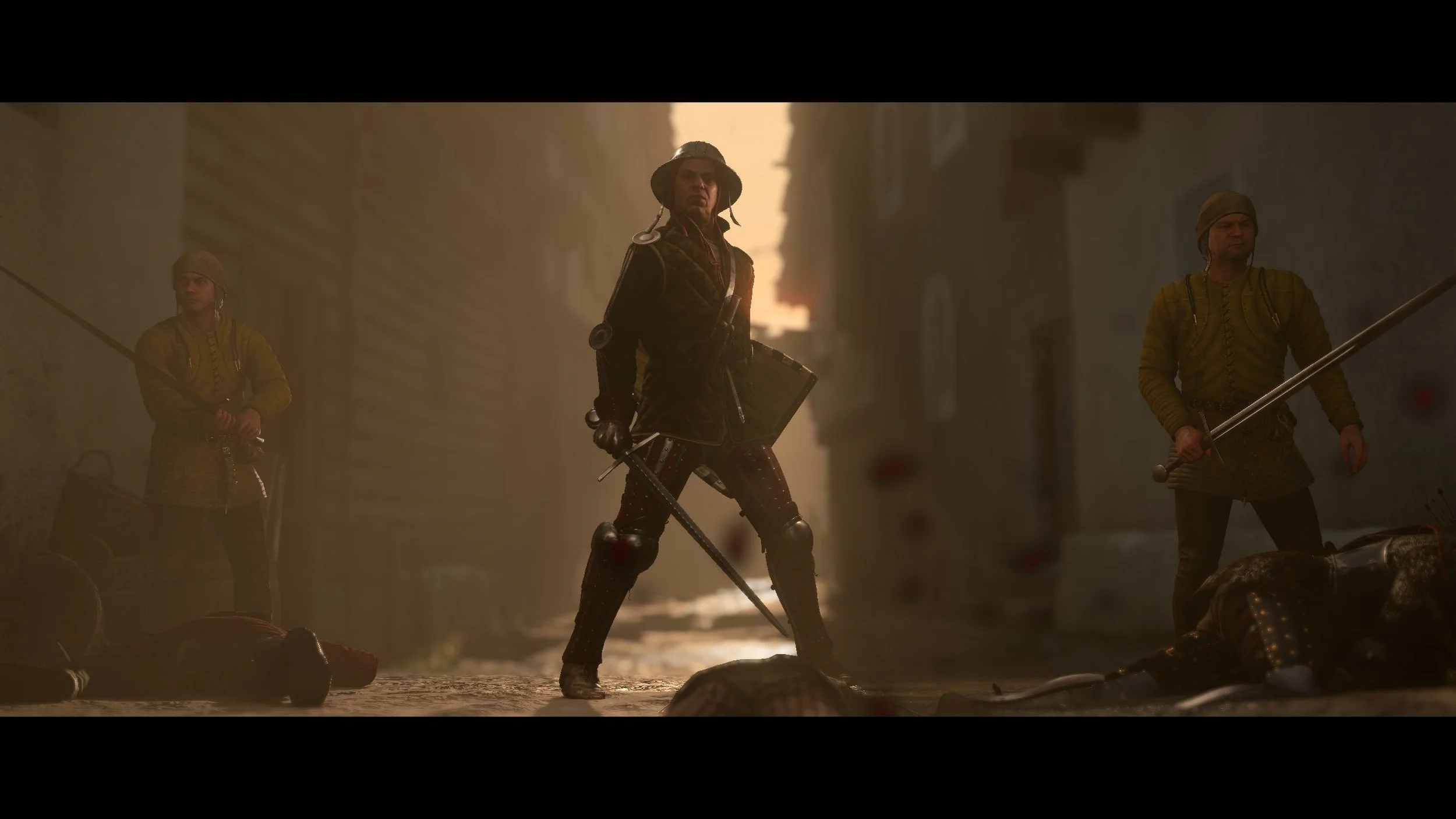
Epic moment… very cool!
Comparison to the Original
The original Kingdom Come: Deliverance is a story of revenge. It explores the bleak reality experienced by common people in medieval Europe. It attempts to strip away the fairy-tale backdrop from our understanding of the past and allow us to experience a bitter, realistic world. It’s a clunky game, and I had a lot of complaints when I wrote about it years ago. But it stuck to its goals and told a compelling story. I walked away from Kingdom Come: Deliverance with a deep appreciation for the past and the plight of the people who came before us. It avoided the power fantasy of becoming an unbeatable warrior and instead gave you the experience of what it might be like to be a regular grunt in medieval warfare.
In a rather significant tonal shift, Kingdom Come: Deliverance 2 decides to revel in that power fantasy far more than its predecessor. Not to the extent of a fantasy game where you become a literal demigod by the end, but the developers clearly chose to shift the narrative away from the story of a lowly peasant struggling in a backwater countryside toward the story of an incredibly gifted young soldier whom everyone is impressed by. The protagonist is no longer a useful peon; he is now rubbing shoulders with kings and nobility.
The narrative has lost its most compelling point of interest. It reminds me of The Brothers Karamazov, when the story follows a tangent about the life of a poor peasant girl: “I am ashamed of keeping my readers' attention so long occupied with these common menials, and I will go back to my story.” The narrator is aware that the lives of common peasants are more interesting and compelling than the petty issues of their upper-class counterparts, while at the same time feeling that their lives are not worthy of being written about. It’s a bit of a paradox.
Unfortunately, Kingdom Come: Deliverance 2 is not being ironic in its focus on the nobility. From a purely historical perspective, there is certainly more action. But the story amounts to watching the pieces of a chessboard move back and forth. The characters are motivated largely by greed and self-interest. Those who are common folk are driven by revenge and despair, completely willing to be used by the powerful.
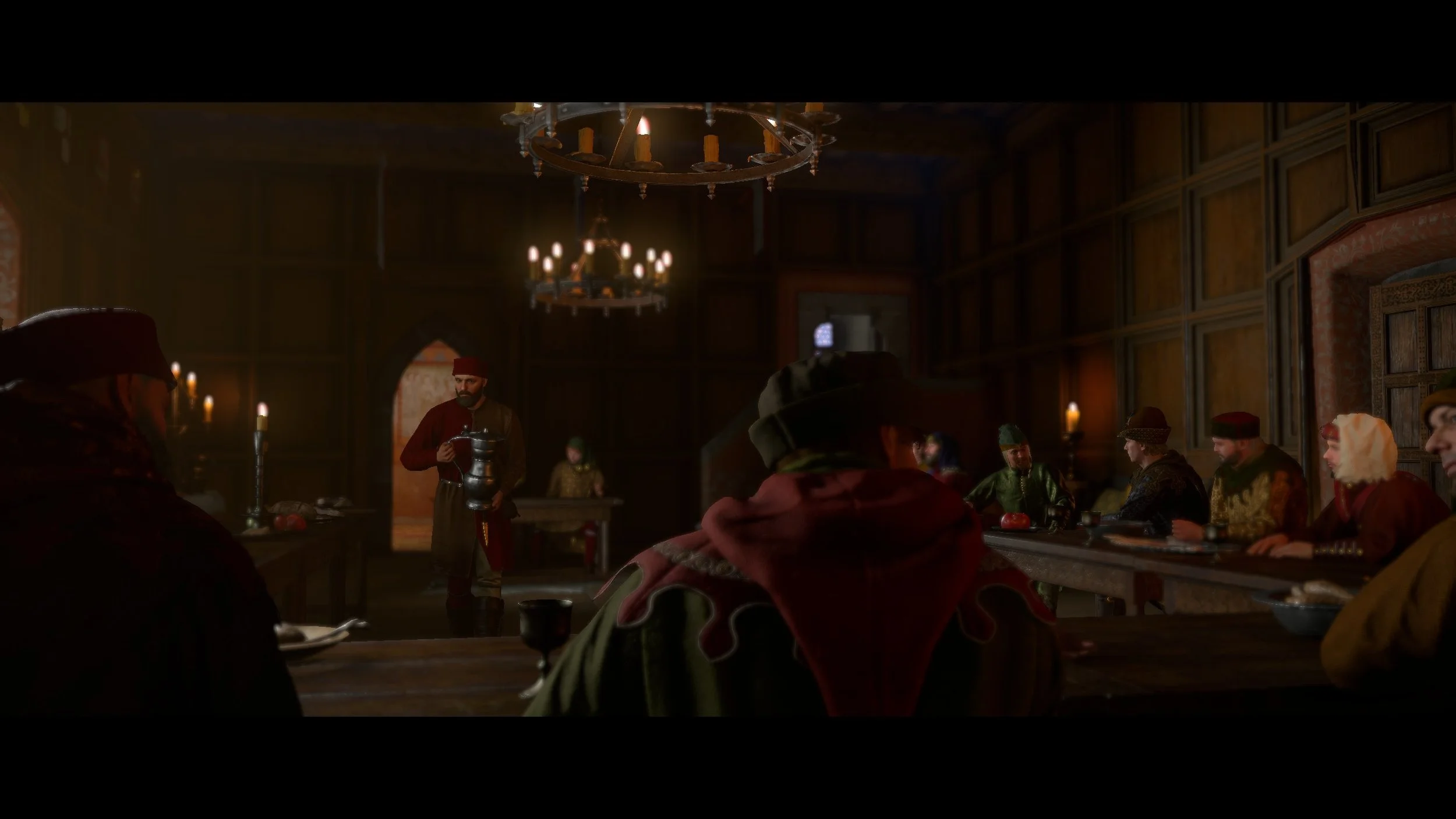
At least a quarter of the final act of the game is spent in meetings that def could have been an email….
It’s such fertile ground for examining how individuals were impacted. How were communities organized? How did ordinary people survive? But I personally felt the game fell terribly flat when it came to its narrative.
Ultimately, I don’t think Kingdom Come: Deliverance 2 is really trying to say anything to the player. I don’t believe it wants you to walk away with a deeper understanding of the world it has created, the violence it portrays, or the history it draws inspiration from. It makes a half-hearted attempt to encourage reflection on how your decisions affect others, but this message is so milquetoast and divorced from the actual experience of playing the game that it feels completely shoehorned in. It does not respect the player’s intelligence.
After spending 100 hours murdering and looting your way through the countryside, you might expect more than an NPC asking in the final five minutes, “Did the end justify the means?” If I wasn’t supposed to murder and steal, there should have been actual mechanics or narrative consequences discouraging those actions. Instead, the game presents itself as a medieval playground.
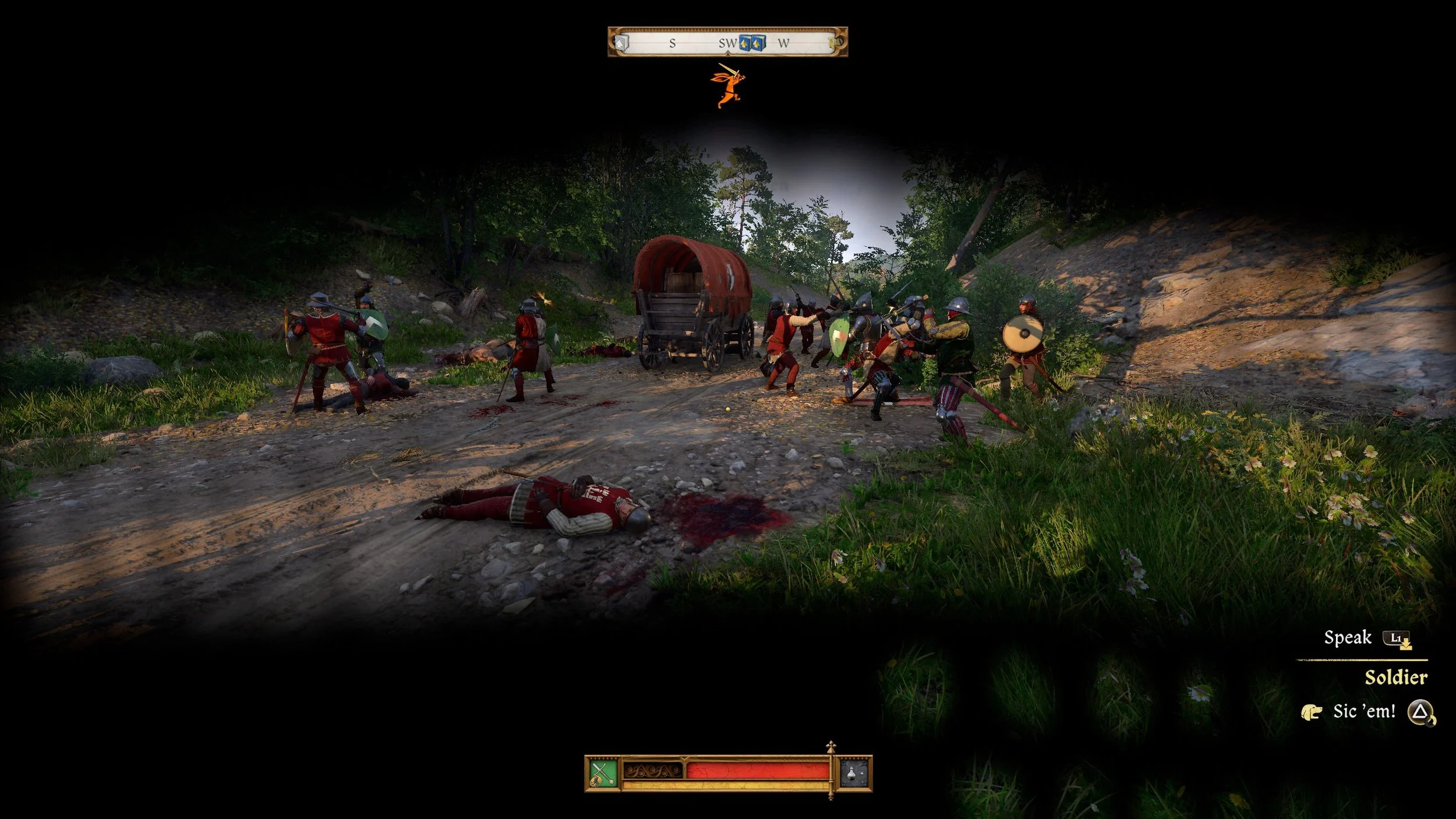
For some reason, i took literally 2 screen shots of actual combat… and each one of them i’m wearing a helmet which applies this filter covering half the screen…. I need to get better at my screen shot game…
War
One area where the game does have something to say is war and sacrifice. A central theme of the game is war: its costs and its justifications. The many scenes and set pieces portraying the devastation of war are the strongest aspects of its narrative. It’s filled with compelling moments of horror as you ride through a town burned to the ground, see bodies strewn across the road, and watch your character react in disbelief upon realizing his own side is responsible.
Many battles take place in small settlements occupied by soldiers who have either kidnapped or slaughtered the residents. In these moments, the game rises above being merely entertaining and becomes genuinely nuanced storytelling, allowing the player to engage with an internal moral conflict. You might even begin connecting the dots and realize that what you are witnessing is a portrayal of real historical suffering, prompting the question: was this war worth the lives lost?
Ironically, these moments are not central to the larger narrative. They are isolated vignettes meant to illustrate how war affects common people while powerful figures make decisions about their lives. This only reinforces the frustration of having the protagonist constantly present in the rooms where those callous decisions are being made. It almost undermines the point these vignettes are trying to make: that there is a real human cost to war, and that those making the decisions are detached from it. But your character is not detached. He is fully aware of the pain and suffering being inflicted. At the same time, he is intimately familiar with the flaws of the men giving these orders, yet still seems convinced that the only path forward is to continue supporting them.
It’s a kind of narrative dissonance I did not fully notice until I sat down to write, and in retrospect, it has left me disappointed with the story.
I wonder how much more compelling the narrative would have been if the protagonist had been locked out of those rooms where decisions were made. If he truly experienced the suffering of his fellow peasants while receiving orders from distant nobles to burn down another village. How much more visceral would his conflicts with the nobility feel in those situations? How much more climactic would it be when he became morally conflicted and bitter toward people making life-and-death decisions without understanding—or caring about—the common folk dying because of them?
The game wants to tell that story, I think. But it falls terribly short. Ultimately, all the suffering is framed from the perspective of the people inflicting it. The peasants are flat, reduced mostly to scenery. Their suffering exists merely as a backdrop to the infighting of powerful people.
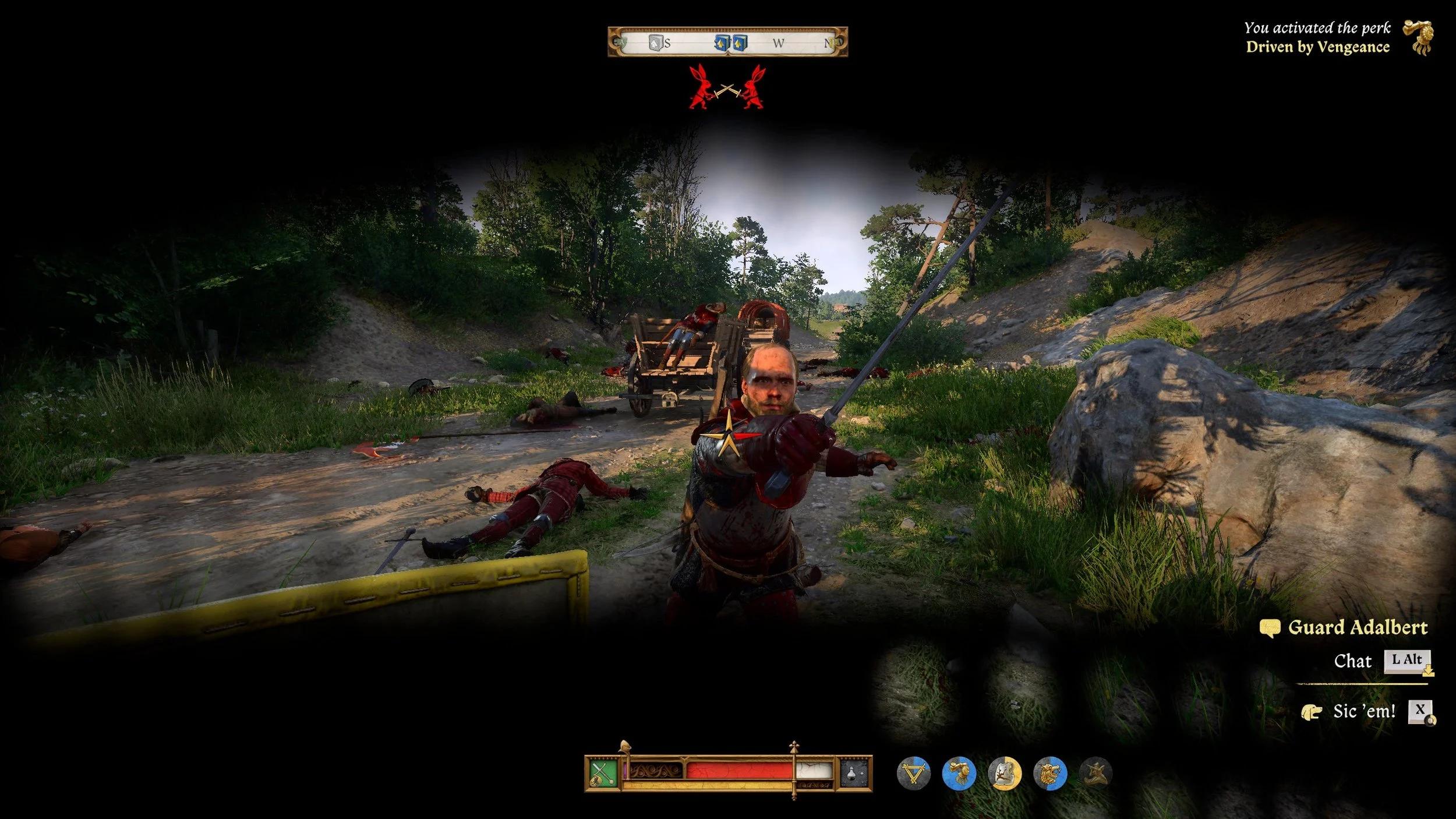
This is the 2nd screen shot… and I’m literally fighting the weakest looking guy…
The Soul
From a gameplay perspective, the sequel improves on its predecessor in many ways. It takes major steps toward becoming a more polished and accessible game, though in doing so it loses much of the charm and character of the original. Combat is snappier and easier, but that means much of the skill and struggle of the first game has disappeared. The survival elements feel streamlined to the point that, by the end of the game, my character barely needed to eat or sleep.
The role-playing systems have also been tuned so that once fully leveled and equipped with expensive armor, you become nearly unstoppable. By halfway through the story, I was already close to max level and wearing some of the best gear in the game.
All of this leaves the game feeling somewhat soulless. The hyper-realism that informed every mechanic in the original Kingdom Come: Deliverance is still present, but streamlined to the point where features that once felt quirky now simply feel clunky.
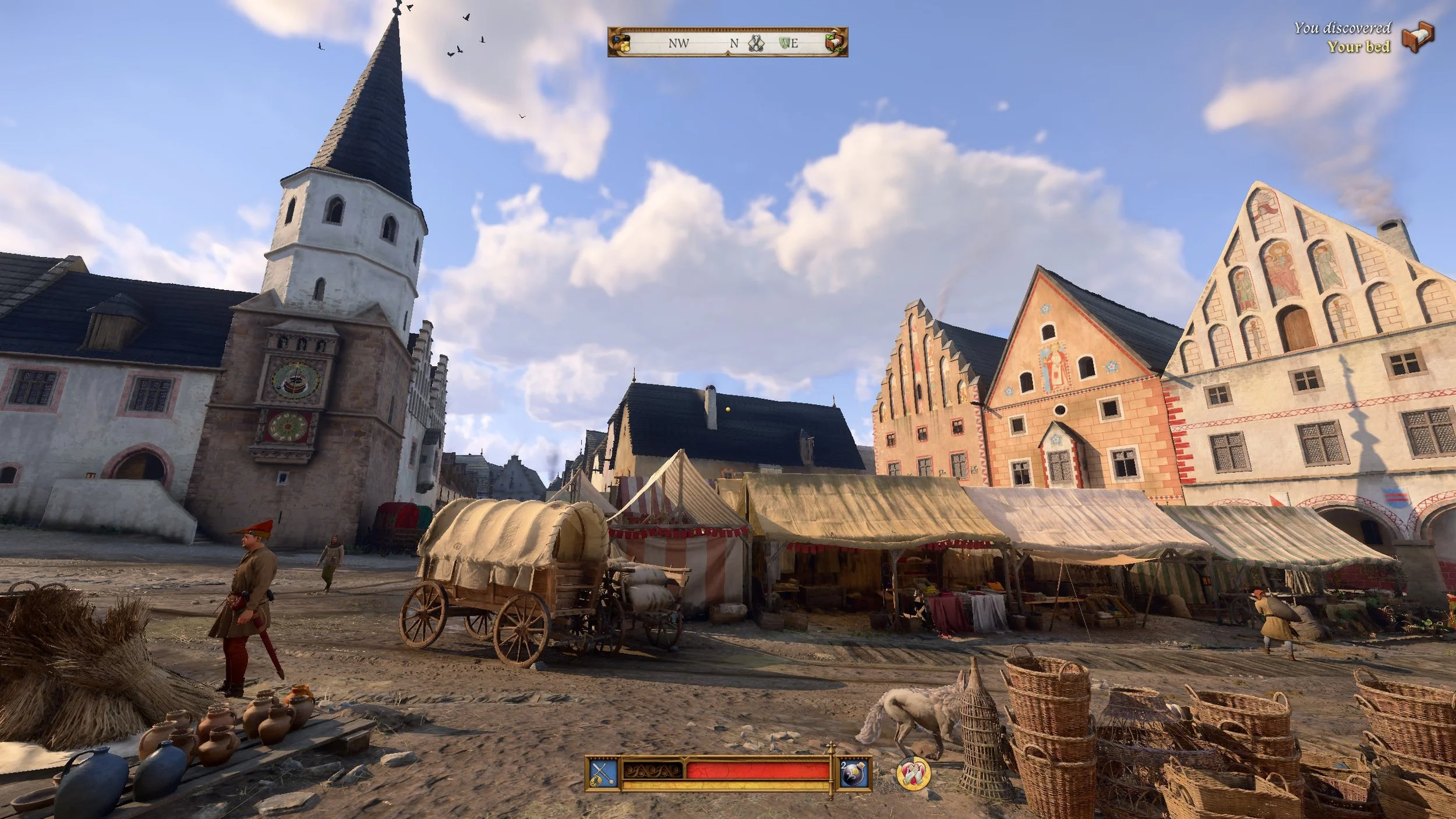
I’ll be the first to admit, this does not get across how cool the city of Kuttenberg is in the game. It’s genuinely impressive.
Religion
Religion remains a major part of the series, and I am glad this aspect carried over into the sequel. I am always deeply interested in how religion is portrayed in video games; it offers an opportunity to step into the mindset of someone from another era and experience what their faith might have been like.
However, unlike the first game—which featured several lengthy questlines centered around religious practice and belief—religion here is more of a role-playing flavor element. I do not necessarily think this is a bad thing. In some ways, it allows religion to feel more integrated into everyday life. You are constantly prompted to pray or express opinions on matters of faith, and religion becomes an all-encompassing part of the protagonist’s worldview rather than a series of isolated side quests.
Does the game say anything particularly interesting about religion? Not really. But it is still interesting to experience.
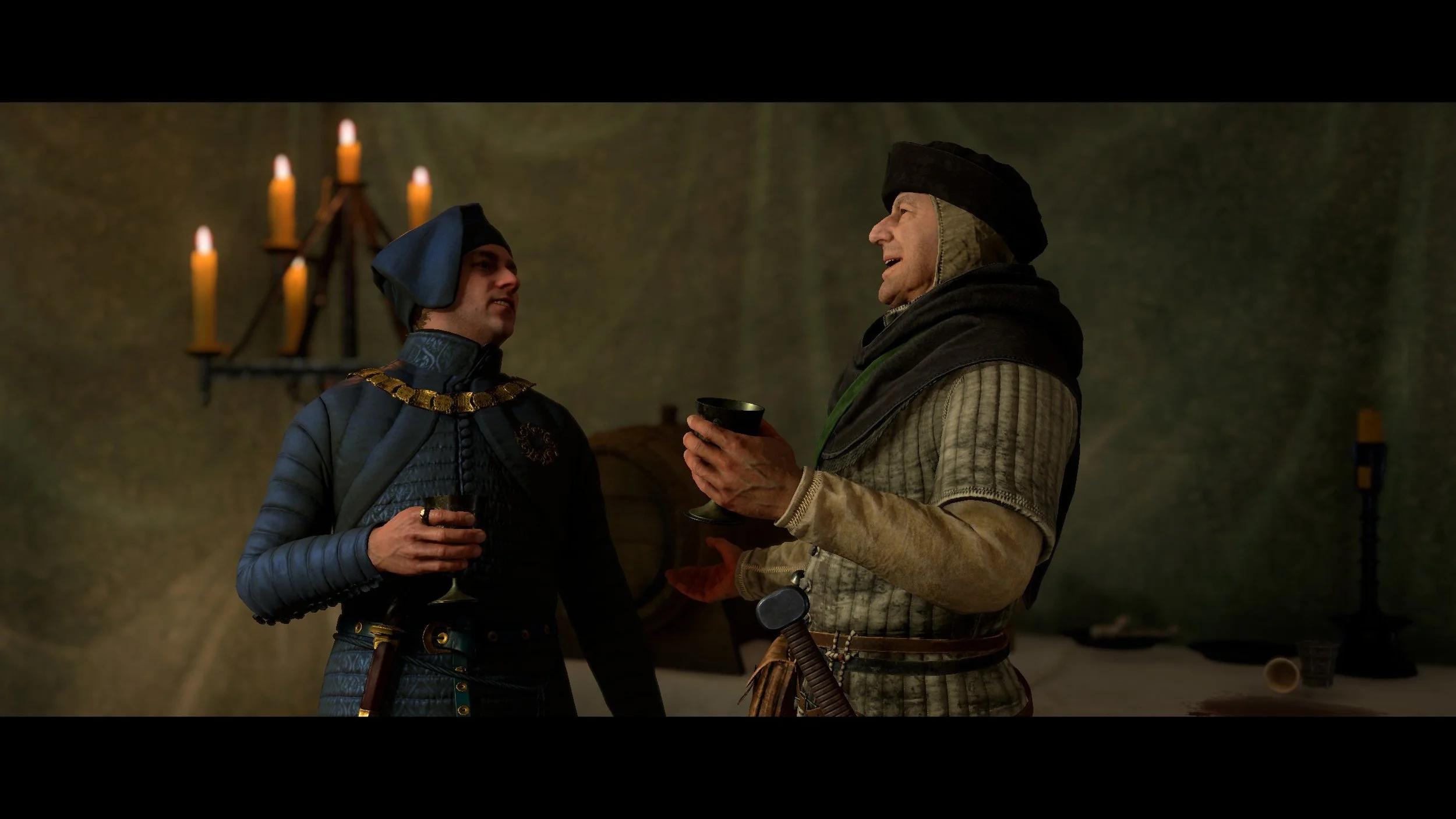
Ha ha ha! Isn’t it wonderful we found this uneducated peasant who is able to resolve all our differences and make backroom deals with us and win the war almost singlehandedly! Its a great thing!
Final Thoughts
The great problem with Kingdom Come: Deliverance 2 is that it is a great game. It’s fun, compelling, and easy to lose yourself in. But it feels flat. It tells an entertaining story, yet it tries too hard to recapture the effortless magic of the first game, and in doing so becomes far more forgettable.
KCD2 is a series of contradictory game design decisions. At times it feels like a masterpiece; at others, a complete mess. I enjoyed the story enough to see it through to the end, but begrudgingly so. The game’s strengths were never quite strong enough to overcome its messiness. It is far too long and staggeringly huge. From the countryside you explore to the sprawling story and endless side quests, the game is absolutely packed with content. It seeks to immerse you in a medieval world of war and violence—but after all that time, it still does not manage to say anything especially interesting.